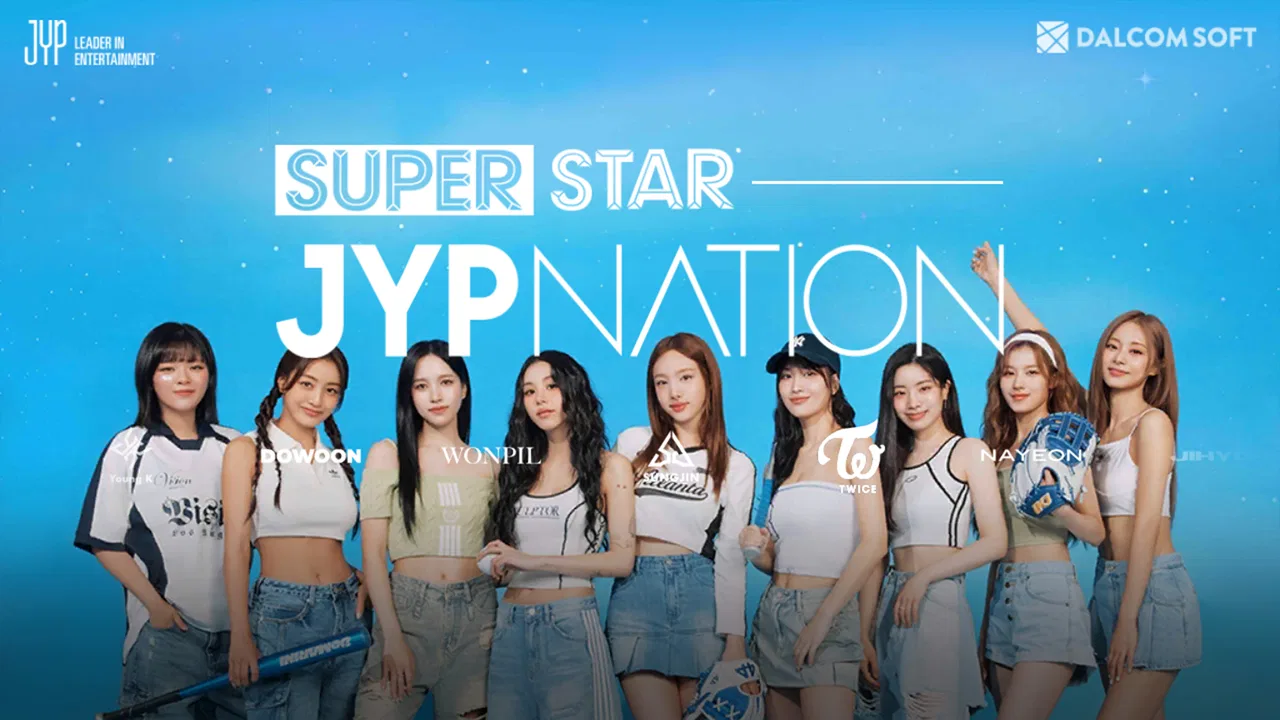
SUPERSTAR JYPNATION
- 4.7
- Rating
- 5.00M
- Installs
- Free
- Price

 Analysis by App-foxy
I came to SUPERSTAR JYPNATION expecting a straightforward music game, but its appeal is more specific than that. It is built around the JYP NATION artists and songs, with each track turned into a tap-and-follow challenge. That makes it a natural fit for listeners who already have a personal connection to the artists, but it also gives rhythm-game fans a focused way to explore a particular catalog.
The basic idea is easy to understand: listen, watch the notes arrive, and respond in time. What makes the experience last is the steady sense that every session can improve something, whether that means learning a difficult section, performing a familiar song more cleanly, or building enough confidence to move beyond the easiest play style. I found it most enjoyable in short sessions, when I wanted something active but did not want to commit to a long story or complicated strategy game.
Developed by Dalcomsoft, Inc., this free music game is available for players rated Everyone and supports devices running Android 7.0 or later. It has reached over 5 million installs, while its average score sits at 4.6 from around 146 thousand ratings. Those figures suggest a broad audience, but they do not tell you whether it suits your habits. The important question is whether you enjoy repeating songs to improve timing and whether the JYP NATION lineup gives you enough reason to keep returning.
You May Also Like

 Blood Strike: 2.5 Anniversary
Blood Strike’s Loadouts Turn Every Drop Into a Tactical Gamble
A close look at Blood Strike’s custom loadouts: how fast access to signature weapons reshapes its battle royale rhythm, rewards preparation, and narrows the gap between fights.

 Pandora - Music & Podcasts
Pandora’s Music Is Easy to Start, but Harder to Recover
Pandora’s strength is its low-effort path from a seed to a station. Its weak spot is how much confidence it asks you to place in connection, setup, and quiet recovery.

 8 Ball Pool
 Is Built on Rivalries, Rematches, and Routine
A close look at the rivalries, rematches, shared routines, and unanswered safety questions that turn a quick pool match into a persistent mobile community.

 Samsung Music
’s Quiet Strength Is Playing What You Already Own
Its reach comes less from spectacle than from dependable access to a personal library. That simplicity is both the app’s strongest retention engine and its ceiling.

 AccuWeather: Weather Radar
AccuWeather Review: A Quick, Clear Forecast for Everyday Decisions
For everyday plans, the best forecast is the one you can understand quickly. AccuWeather makes rain timing, radar, and local conditions easy to act on, with a few trade-offs.

 Hill Climb Racing
Why Hill Climb Racing Still Turns Crashes Into One More Run
A tiny car, a bumpy hill and one more upgrade: Hill Climb Racing keeps resurfacing because its simple chaos makes every near-miss feel personal.
More From Our News Desk



How the first goals turn into a playing routine
The opening appeal is immediate because the goal of a song is visible from the first attempt: keep the rhythm, avoid mistakes, and finish with a result that feels better than the last one. I like this kind of design because it does not require a long tutorial to explain why I should play again. A missed sequence is understandable, and a cleaner run gives me a clear reason to retry.
For a new player, the best early goal is not chasing a perfect performance. It is learning how the note patterns relate to the music. Some players will naturally focus on the beat, while others will rely more on the visual movement. I found that switching between those two approaches helps when a song feels unfamiliar. Listening closely can prepare me for the rhythm, but watching the lanes remains essential when the arrangement becomes busier.
The JYP NATION focus also changes how motivation works. If I already like a song, practice does not feel like anonymous repetition. I am returning to a track I recognize, and each attempt gives me another chance to play it with more control. If I do not know the artists, the game becomes more of a catalog sampler. That can be enjoyable, although the emotional pull is weaker than it is for an established fan.
One practical way to begin is to choose a small group of songs rather than jumping randomly between everything available. Repeating one comfortable track helps establish timing, while adding one more demanding song prevents the routine from becoming passive. This creates a useful personal loop: warm up with something familiar, test yourself on a harder selection, then finish with a song you enjoy.
The early stages are also where I noticed an important trade-off. Rhythm games reward concentration, but concentration has limits. When I played while distracted, even songs I knew well became unreliable. A short, focused session was usually more productive than a longer session played while multitasking. That makes the game convenient for breaks, but not ideal if you want something that can run in the background while you do other things.
What progress feels like during ordinary play
Progress in a game like this is felt through performance rather than through a traditional adventure storyline. I can tell that I am improving when a section that once caused repeated misses starts to feel predictable. The result is satisfying because it comes from learning the pattern, not simply waiting for a character or location to unlock.
I recommend treating each failed attempt as information. If mistakes happen near the same point, the problem may be a sudden pattern change rather than the whole song being too difficult. If errors are spread across the track, I may be playing too quickly, watching the wrong area, or trying a difficulty level that does not match my current control. This small diagnostic habit makes retries more useful.
Another helpful approach is to separate recognition from execution. Knowing the chorus does not automatically mean I can tap it accurately. Familiar music can even create overconfidence, because I may anticipate the vocal phrasing instead of following the actual notes. When that happened, I had better results by trusting the visual cues and letting the song support my timing rather than dictate it.
The game’s progress is therefore personal and immediate. I do not need to compare every performance with other players to understand whether I am getting better. A cleaner chain, fewer mistakes, or comfort with a faster passage can all serve as meaningful milestones. For me, this was more motivating than a purely numerical reward because the improvement carried over directly into the next attempt.
Players who want a more structured routine can set simple targets for themselves: finish a song without losing focus, improve one troublesome section, or move up only after a lower level feels consistent. This is especially useful because pushing ahead too quickly can make the game feel harsher than it needs to be. A modest goal keeps the session challenging without turning every mistake into a reason to quit.
Reading the difficulty curve without burning out
The challenge comes from the relationship between speed, pattern density, and attention. At a comfortable level, I can enjoy the song and still react calmly. As the notes become more demanding, the experience shifts from listening-first to concentration-first. That change is the point at which some players will become more engaged, while others will decide that the game has stopped being relaxing.
I appreciate that rhythm-game difficulty is not only about faster reactions. A track can feel difficult because of an unexpected pattern, a busy section, or the need to divide attention across several areas. When I struggled, simply playing the same song repeatedly was not always the answer. Taking a short break or returning to an easier track often helped more than forcing another attempt while tense.
There is also a physical side to the challenge. Longer sessions can make small timing errors more common because my hands and eyes lose precision. I found that alternating demanding songs with easier ones kept the experience enjoyable. This is a useful routine for anyone who wants to practice seriously without turning the game into a test of endurance.
Players should also consider their device and playing conditions in practical terms. A stable grip, a clean screen, and a quiet environment make timing easier. I would not judge my ability from a poor session in which notifications, movement, or an uncomfortable position interrupted concentration. These details matter more in a rhythm game than they do in a slower puzzle or management title.
For a newcomer, the fairest way to judge the curve is to give the game several focused attempts rather than deciding after one difficult song. The first session includes learning the interface and the visual language of the notes. Once that becomes familiar, the challenge feels more readable. Still, players who prefer relaxed play with little repetition should know that improvement depends on practice, not just casual progress.
Where the pacing encourages another attempt
The pacing works because a song is a complete, manageable unit. I can play one track during a short break and stop without feeling that I abandoned a large mission. That makes the game easy to fit around a commute, a quiet evening, or a few spare minutes before bed, provided I am in a place where I can concentrate on the timing.
At the same time, the compact format can encourage more retries than I initially planned. A near-success is particularly persuasive: missing one section near the end makes another attempt feel reasonable. This is a strong retention loop because the next goal is not abstract. I know exactly what I want to improve, and the song gives me an immediate opportunity to try again.
The danger is that repetition can become mechanical. If I keep playing only the same comfortable track, the game loses some of its discovery. I got more value by rotating between known favorites and songs that challenged a different skill. That balance keeps the catalog from feeling like a collection of identical exercises.
Free access also comes with a consideration that I would not ignore. The game is free to download and play, but it includes in-app purchases ranging from $0.99 to $89.99 per item. I recommend deciding in advance whether I am comfortable spending anything, rather than making that decision while chasing progress or trying to improve a favorite collection. The broad price range means the purchase aspect deserves attention, even for players who intend to start without spending.
That does not make the game unsuitable for everyone, but it changes how I would approach it. A careful player can treat purchases as optional and focus on learning songs, while a completion-focused fan may feel more pressure to invest. I would especially suggest that younger players use the appropriate device controls around purchases, since the age rating is Everyone but the spending choices still require adult awareness.
Who will enjoy the progression, and who may not
This is a strong choice for JYP NATION fans who want their favorite artists connected to an interactive challenge rather than passive listening. It is also appealing to rhythm-game players who enjoy building skill through repetition and who like the idea of playing through a focused artist catalog. The music theme gives every retry more personality than an arrangement of anonymous tracks.
I would be more cautious about recommending it to someone who wants a deep story, open exploration, or a game that changes dramatically from session to session. The core pleasure is refining performance. If tapping along to songs is not enjoyable by itself, the progression may not provide enough variety to compensate.
It may also be a poor fit for players who dislike score chasing or who become frustrated by repeated mistakes. A conventional casual music app is better if the main goal is simply to listen. A broad rhythm game may be preferable if variety across many genres and unrelated artists matters more than the JYP NATION identity. In contrast, this title makes sense when the music selection is part of the reason to play.
Compared with a standard music player, the difference is obvious: this game asks for active attention and rewards timing. Compared with a general rhythm title, its narrower identity can be both its greatest strength and its limitation. I would choose it over a broader alternative when I specifically want these artists and songs. I would choose the broader option when I am looking for a constantly changing musical range.
One everyday scenario shows where it fits best. After work, I might have ten minutes before dinner and want something more engaging than scrolling. I can choose a familiar song as a warm-up, attempt a harder one while my attention is fresh, and stop after a final comfortable track. That session feels complete even without a long campaign, and it gives me a concrete improvement to carry into the next visit.
Practical expectations before installing
The current version is 3.29.3, and the game supports Android 7.0 or later. Those details matter if I am installing on an older phone or tablet, especially because rhythm games are sensitive to how comfortably the device handles touch input. I would check the operating-system requirement before planning to use an older spare device.
The game is free, carries an Everyone content rating, and has accumulated around 2.4 thousand written reviews alongside its much larger rating total. I read that combination as evidence of a sizable player base with many quick reactions, but I would still judge the experience by my own tolerance for repetition and by how strongly I connect with the music.
One question many new players have is whether they need to be deeply familiar with every artist to enjoy it. My answer is no, but familiarity changes the experience. Recognizing a song makes practice more rewarding, while unfamiliar tracks can still work if I enjoy learning their rhythm. The game is most compelling when the player is open to both listening and performing.
Another question is whether difficult songs should be treated as a wall. I do not think so. A better method is to identify the exact moment where control breaks down, then return with a calmer approach. If the same passage remains troublesome, switching songs for a while can prevent frustration. Progress is more reliable when practice stays deliberate instead of becoming a string of rushed retries.
Players may also wonder how much time they need. There is no need to reserve a whole evening. The song-based format supports short visits, but meaningful improvement may require repeated sessions. I would describe it as easy to start and harder to master, which is a good balance for fans who want a game they can revisit without finishing everything immediately.
My verdict on the long-term loop
After spending time with it, I see SUPERSTAR JYPNATION as a focused rhythm game whose strongest progression comes from the player’s own growing accuracy. The early goals are clear, the performance improvements are easy to notice, and the short-song structure makes another attempt feel natural. Its identity is not built around a huge world or a complicated plot; it is built around turning familiar music into something I actively practice.
The pacing is at its best when I alternate comfort and challenge. Playing only easy songs can become dull, while forcing difficult patterns for too long can make the game feel exhausting. The most satisfying routine is to use favorite tracks for motivation, unfamiliar songs for variety, and tougher selections as specific skill tests.
I also think the purchase range deserves a deliberate attitude. Starting for free is straightforward, but players should decide how they want to handle optional spending before the desire to progress or collect takes over. That is not a reason to avoid the game, but it is part of making the experience fit comfortably into everyday use.
My recommendation is simple: install it if JYP NATION music already matters to you, or if you enjoy rhythm games where improvement comes from learning patterns and repeating songs with purpose. Skip it if you want a music app rather than a game, dislike retry-based challenges, or need a much wider musical identity. For the right player, it offers a satisfying loop of listening, reacting, noticing mistakes, and trying again—and that is enough to keep a good session moving without pretending to be something larger than it is.
FAQs for SUPERSTAR JYPNATION
01What is SUPERSTAR JYPNATION?
SUPERSTAR JYPNATION is a rhythm game featuring artists from JYP Entertainment. Players tap along to music tracks, completing various challenges and earning points. It's available on both Android and iOS platforms. The game includes songs from popular JYP artists, offering fans an interactive way to engage with their favorite music.
02Is SUPERSTAR JYPNATION free to play?
Yes, SUPERSTAR JYPNATION is free to download and play. However, it offers in-app purchases for items like additional music tracks, cards, and other upgrades. These purchases can enhance the gaming experience but are not necessary to enjoy the core gameplay. Players should be mindful of spending, especially if children are using the app.
03What are the main features of SUPERSTAR JYPNATION?
The game features a wide range of songs from JYP Entertainment artists, including TWICE, Stray Kids, and ITZY. It offers various levels of difficulty, leaderboards, and events. Players can collect and upgrade cards of their favorite artists, participate in weekly league competitions, and enjoy frequent updates with new content.
04Can I play SUPERSTAR JYPNATION offline?
No, SUPERSTAR JYPNATION requires an internet connection to play. This is necessary to access the latest updates, participate in events, and compete in online leaderboards. An active connection ensures players have the best experience with up-to-date content and community interaction.
05How do I improve my skills in SUPERSTAR JYPNATION?
Improving skills in SUPERSTAR JYPNATION requires practice and familiarity with the songs and gameplay mechanics. Players can start with easier levels to build confidence and gradually tackle more challenging tracks. Regularly upgrading cards and participating in events can also enhance your abilities and score potential.
Pros
- Impressive music library from JYP artists.
- High-quality graphics and animations.
- Engaging rhythm-based gameplay.
- Regular updates with new content.
- Global leaderboard for competitive play.
Cons
- Requires constant internet connection.
- In-app purchases can be costly.
- Limited offline play options.
- Occasional lag on older devices.
- Energy system restricts long sessions.

SUPERSTAR JYPNATION
Gallery